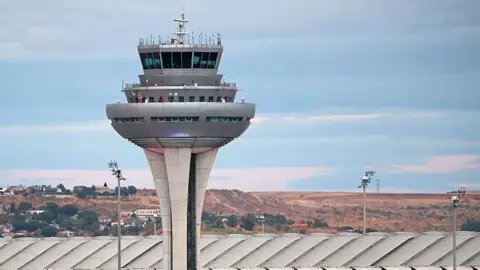
The Spanish government has restricted its skies to American military aircraft engaged in strikes on Iran, as confirmed by Spain's defence minister Margarita Robles.
Official Stance
"We refuse to permit the use of our military bases for any acts related to the war in Iran," she said, explaining that Spain had "expressed this stance to the United States from the start."
Foreign Minister José Manuel Albares said the goal of the decision was to "not do anything that could fuel an intensification in this conflict."
US Response
The US has so far been silent, but President Donald Trump has in the past stated to institute a complete economic blockade on Spain over its objection to the Iran war.
Spanish Prime Minister's Stance
From the beginning of the conflict in the end of February, the Spanish Prime Minister Pedro Sánchez has been a prominent voice against of the military actions, labeling them "irresponsible" and "against international law."
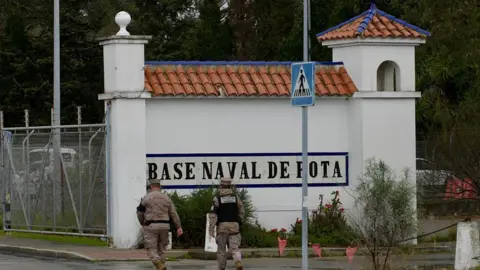
Last month, Sánchez said Spain had denied the US use of the two shared military bases at Rota and Morón, both in Andalusia.
"We are a sovereign country that does not wish to take part in unlawful conflicts," he said.
Recently that "any proposed route that entailed missions connected to the operation in Iran were denied - every single one of them, even for refuelling aircraft."
Logistical Consequences
Some US bombers participating in operations in Iran are operating from the RAF Fairford base in Gloucestershire, after the UK agreed to a petition from the US.
Planes taking off from there will be compelled to avoid a large portion of the Iberian peninsula - either by routing across the eastern Atlantic or over France.
It has been reported that aircraft would be permitted to cross Spain's airspace or land at the military installations solely during emergency.
Wider Reflections
In a speech, the leader spoke about other conflicts and said the Spanish government's stance could be described as "no to war."
Later in March, the embassy of Iran in Spain indicated Tehran would be open to requests from Madrid regarding shipping through the critical waterway because Spain was "adherent to international law."
Global Oil Impact
Approximately 20% of the global crude oil typically travels through the key maritime channel separating Iran and the peninsula of the Arabian peninsula.
For weeks, the threat of strikes by Iranian drones, missiles has halted traffic, triggering a spike in oil prices.


